

The senses have a powerful role. They influence the perception of everything that surrounds us and of course, if applied to products, they can also impact how we judge them. More often than believed, the way we evaluate products is influenced by the sensory properties of the packaging. This phenomenon is called “sensation transference”.
Our perception of a product is strongly affected by the multisensory design of the packaging. Today it has become crucial to integrate the senses when designing product packaging. In this context, an interesting sense to consider is smell.
The smell is the most powerful and emotional of all the senses. It is strongly connected to our memories and can make you recollect moments that you didn’t even remember you experienced. Smell has a powerful influence also on consumer behaviour and decision-making. For instance, when a customer enters a store, it is enough for an ambient scent to be perceived as pleasant to elicit positive reactions in the customer. Scent can affect the evaluations of the retail environment, its products and quality. It can attract new customers, heighten value perception, expand brand recognition and of course increase customer satisfaction.
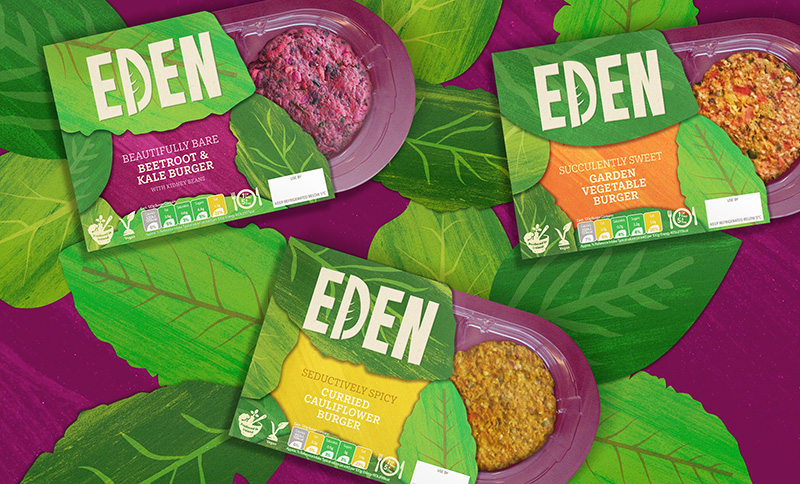
A further important effect of using scented packaging is that it can engage customers at a deeper level. Considering that 75% of the emotions we feel every day are affected by smell, this seems logical.
The emotional bond that we form with the scents we smell throughout our lives is permanent. A particular scent associated with a product and its packaging can make us remember the good memories and experiences of the past. Customers can become more likely to purchase the specific product as a result of that recall. The customer will also be more likely to form a deeper relationship with the brand that allowed him/her to relive that experience. By doing so, brands can better connect with their customers.
An interesting business that focuses on incorporating scent into packaging is Printex Transparent Packaging. The business creates plastic packaging with touch-and-sniff scents embedded in the design. The custom scented packaging uses essential oils encapsulated in microbeads that are mixed into varnish and applied to the package. What happens then is that customers, by touching the product or examining it, simply scratch the scented surface, breaking the microbeads that release the fragrance embedded there. In this context, the interesting part is also that they use essential oils that are related to the product itself. For example, a Christmas product would have packaging that smells like pine or a strawberry tea would have its box smelling like strawberry. Choosing a scent that is congruent with the product is the key.
The smell is the most important sense and this is the reason for which it can be crucial to enhance it with products and their packaging. The application of smell in the product packaging design has profound and positive consequences on consumer behaviour and the relationship between brands and their customers. However, to achieve the desired results, it is fundamental to choose the appropriate scent, congruent with the product but also with the brand image and personality.
Author: Alice Micheletti
References
Packaging Getaway. (2016). The smell of success: scented packaging.
Printex Transparent Packaging. Custom Plastic Scented Packaging. Retrieved from: ptpackaging.com
Red Pacific Media. (2018). 3 Benefits of Scented Packaging.
Rimkute, J., Moraes, C., & Ferreira, C. (2015). The effects of scent on consumer behaviour. International Journal of Consumer Studies, 40(1), 24-34.
Shabgou, M., & Daryani, S.M. (2014). Towards the sensory marketing: stimulating the five senses (sight, hearing, smell, touch and taste) and its impact on consumer behaviour. Indian Journal of Fundamental and Applied Life Sciences, 4, 573 -581.
Spence, C. (2016). Multisensory packaging design: colour, shape, texture, sound and smell. In: Burgess, P. (ed.), Integrating the Packaging and Product Experience in Food and Beverages: A Road-Map to Consumer Satisfaction. Woodhead Publishing, pp. 1-22.
Spence, C., & Piqueras-Fiszman, B., (2012). The multisensory packaging of beverages. In: Kontominas, M.G. (Ed.), Food Packaging: Procedures, Management and Trends. Nova Publishers, Hauppauge NY, pp. 187–233.